
RC Window Cleaning LLC
Crystal Clear Windows, Professional Results

About RC Window Cleaning LLC
RC Window Cleaning LLC is a family-owned business dedicated to delivering exceptional window cleaning services for both residential and commercial properties. With expertise in handling buildings up to 3 stories, our experienced team combines traditional cleaning techniques with modern innovations to ensure every window is returned to like-new condition. We pride ourselves on our commitment to safety, quality, reliability, and customer satisfaction, making us the trusted choice for property owners throughout the region.
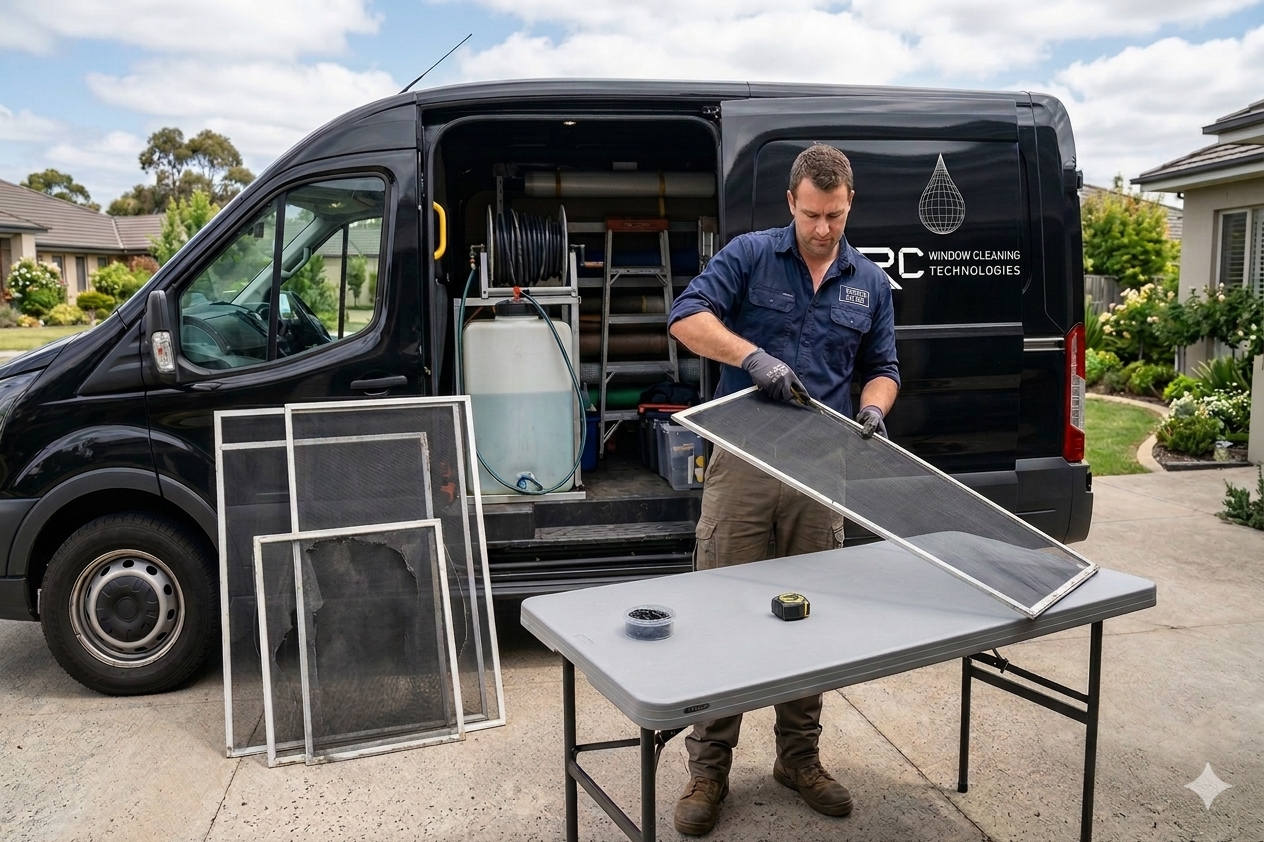
Beyond standard window cleaning, we specialize in advanced glass restoration and hard water stain removal, bringing new life to weathered windows. Our on-site screen manufacturing, repair, and rescreening services with fiberglass or stainless mesh options provide comprehensive solutions for all your window and screen needs. We also offer protective treatments to keep your windows cleaner longer, backed by our dedicated team of professionals who are passionate about industry innovation and excellence.
Our Services
Window Cleaning & Glass Restoration
Professional window cleaning for residential and commercial properties up to 5 stories, including expert glass restoration and hard water stain removal to restore clarity and shine to your windows.
Screen Manufacturing, Repair & Rescreening
On-site screen manufacturing, repair, and rescreening services using high-quality fiberglass or stainless steel mesh options, ensuring durable and effective protection for your windows.

Protective Window Treatments
Advanced protective treatments applied to your windows to maintain cleanliness longer and protect against environmental damage, extending the life and appearance of your glass.
The “hard” water in our city
The Persistent Challenge of Hard Water Stains on Windows
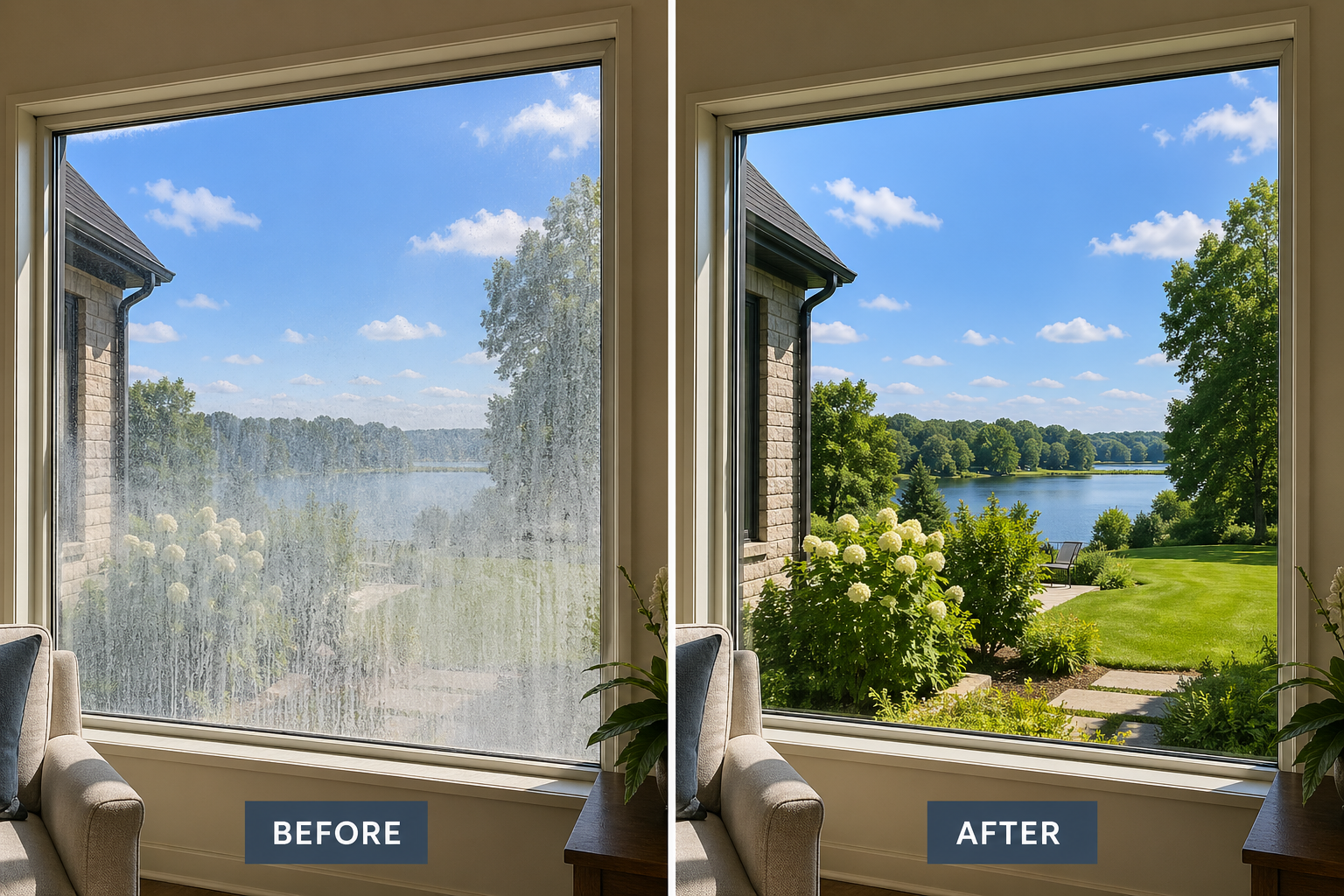
When sprinkler systems strike glass surfaces, they leave behind more than just water droplets; they leave a mineral footprint. While hard water stains are often associated with bathroom fixtures, their impact on residential windows is arguably more destructive. These stains, composed of concentrated calcium and magnesium carbonates, bond aggressively to glass when water evaporates, leaving behind a persistent, white-grey haze that ruins clarity and curb appeal.
The Sprinkler Effect
Windows hit by irrigation systems are subjected to a recurring cycle: the water evaporates in the sun, leaving behind mineral deposits, and the next day, the cycle repeats. Over time, these minerals etch into the glass. Unlike a bathroom mirror where the buildup is localized, window stains can cover large, high-visibility surfaces, and if ignored, the minerals can eventually compromise the structural integrity of the glass itself.
The Failure of Household Solutions
For heavy-duty exterior window buildup, common DIY hacks like white vinegar are rarely sufficient. In extreme cases, the mineral layer has become too thick and crystalline for mild acetic acid to penetrate. Even commercial products like CLR—designed for plumbing and basic cleaning—often provide only minimal, surface-level results, failing to address the deep-seated bonding between the mineral and the silica in the glass.
The Need for Professional Intervention
When household products fail, the situation often requires heavy-duty industrial acid-based solutions. These chemicals are not household cleaners. They are potent, professional-grade compounds that require significant experience, specialized training, and a deep understanding of chemical safety.
What is pure water
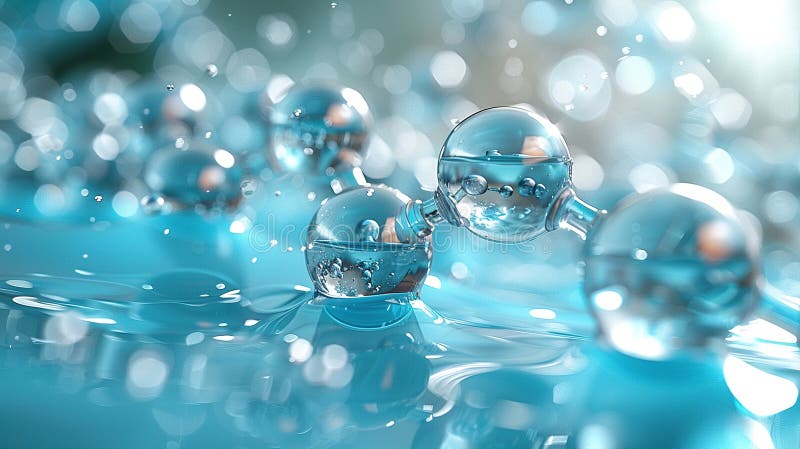
Pure water is often misunderstood as the gold standard for hydration, but the reality is more nuanced. To understand why, we must first look at Total Dissolved Solids (TDS). TDS refers to the concentration of inorganic salts and small amounts of organic matter dissolved in water, including minerals like calcium, magnesium, potassium, and sodium, as well as trace levels of other substances.
The TDS Spectrum
TDS is measured in parts per million (ppm). Tap water typically contains a moderate amount of these minerals, often ranging from 100 to 500 ppm, depending on your local geology and infrastructure. This is why “hard water” in some regions tastes different than the “soft water” in others—those minerals provide texture and flavor.
“Pure” water, conversely, has a TDS approaching zero. This is usually achieved through processes like reverse osmosis (RO) or distillation, which strip the water of almost everything—including the beneficial minerals. While this produces water that is chemically “clean,” it can taste remarkably flat or even slightly acidic because it lacks the buffering minerals that give tap water its character.
Tap vs. Purified
The primary difference lies in the mineral profile. Tap water is a delivery system for electrolytes that are essential for basic biological functions. When you drink water with a healthy mineral balance, you are consuming small, helpful doses of nutrients.
Pure water is essentially a “blank slate.” Because it lacks minerals, some proponents argue that it can act as a better solvent in the body, though the scientific consensus is that both are safe for human consumption. The choice often comes down to taste preference and trust in local water quality. If your tap water has high levels of contaminants, purification is a necessity. However, for most, a simple carbon filter is enough to remove the chlorine taste, allowing you to enjoy the natural, mineral-rich profile of your local water supply without sacrificing health or flavor.

Product or Service Name 3
Brief description of the Product/Service 3. This is where you can highlight the unique features and benefits of your offering.